Every plant in your garden has one non-negotiable requirement: water. But how you deliver that water matters just as much as how much you give. The wrong technique wastes water, invites disease, and can stress plants at their roots. The right one keeps soil moisture consistent, reduces runoff, and saves you time and money over a full growing season.
Here is a breakdown of the most common garden watering methods, from the most hands-on to the most automated, so you can choose what fits your garden, your budget, and your schedule.
Hand Watering
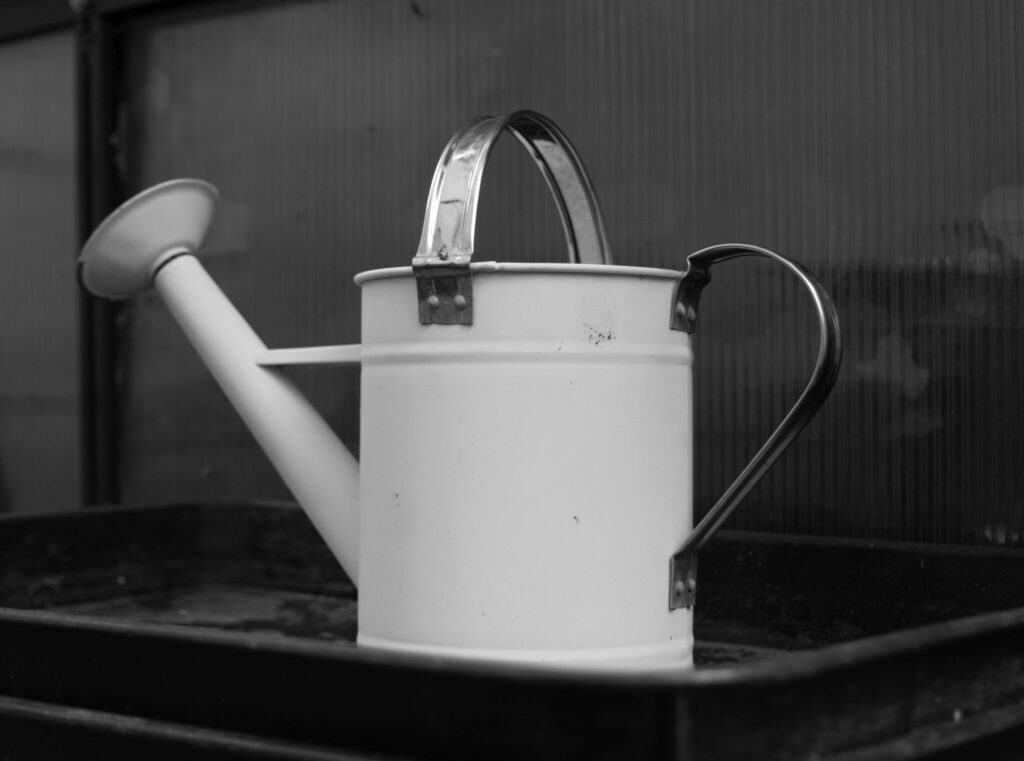
Hand watering with a hose or watering can is the most direct method, and for small gardens or container plants, it is often the best one. You control exactly where the water goes, how much each plant receives, and how gently it is delivered.
The key to effective hand watering is directing water at the base of the plant, not the foliage. Wet leaves, especially in the evening, create conditions that encourage fungal disease. A watering wand or a hose nozzle with a gentle shower setting helps you reach the root zone without disturbing the soil or soaking leaves.
Hand watering also gives you a daily opportunity to observe your plants up close. You will notice pest damage, wilting, color changes, and other early warning signs faster than with any automated system. For gardeners who enjoy the routine, it is as much a scouting tool as it is an irrigation method.
The obvious downside is time. A large vegetable garden or a densely planted bed can take 20 to 30 minutes to water properly by hand, and during a summer heat wave, you may need to do that every single day.
Soaker Hoses
A soaker hose is a porous rubber or recycled plastic hose that seeps water slowly along its entire length directly into the soil. You lay it along the base of a row or weave it through a bed, connect it to your outdoor spigot, and let it run.
Soaker hoses deliver water at or below the soil surface, which means almost no evaporation and no wet foliage. They are extremely water-efficient and work especially well in vegetable gardens, raised beds, and long perennial borders. Because water moves slowly into the soil, it soaks deep rather than running off the surface, which encourages roots to grow downward and become more drought-tolerant over time.
Setup is simple and inexpensive. A standard 50-foot soaker hose costs between $15 and $30. Pair it with a mechanical timer at the spigot and you have a semi-automated system for under $50.
The limitation is coverage. Soaker hoses work in rows and defined beds, but they are not well-suited to irregularly shaped areas or lawns.
Drip Irrigation
Drip irrigation takes the soaker hose concept further. Instead of a porous hose, a drip system uses a network of supply tubing with individual emitters that deliver water at a precise rate, measured in gallons per hour, directly to each plant’s root zone.
This level of precision makes drip irrigation one of the most water-efficient methods available. Studies from the University of California Cooperative Extension have shown that drip systems can reduce water use by 30 to 50 percent compared to overhead sprinkler systems, primarily because water is placed exactly where roots are and evaporation is minimal.
Drip systems are highly customizable. You can run emitters at different flow rates for plants with different water needs, add inline filters to prevent clogging, and connect the whole system to a programmable timer or a smart irrigation controller that adjusts automatically based on weather data.
Installation takes more effort than a soaker hose, and the tubing and emitters require occasional maintenance to clear clogs and check for damaged lines. But for serious vegetable gardens, fruit trees, and landscape beds, the investment in efficiency and plant health is well worth it.
Overhead Sprinklers
Portable oscillating or rotating sprinklers are a step up in convenience and coverage. You connect one to a hose, place it in your lawn or garden, and it broadcasts water over a wide area. They are affordable, require no installation, and can be moved easily from zone to zone.
Overhead sprinklers work well for lawns and large open garden areas where coverage matters more than precision. They are less effective in densely planted vegetable beds, where water needs to reach specific root zones and wet foliage is a concern.
The main inefficiency with overhead sprinklers is evaporation, especially when run during the middle of the day. Watering in the early morning, when temperatures are low and wind is calm, significantly reduces water loss and gives foliage time to dry before evening.
In-Ground Sprinkler Systems
An in-ground irrigation system is the most comprehensive and permanent solution. Pop-up sprinkler heads are installed below grade and connected to a network of underground supply lines, all controlled by a central timer or smart controller. The system is divided into zones, each covering a specific area of your lawn or garden, and each zone can be programmed independently for frequency and duration.
Modern smart irrigation controllers, like those from Rachio or Rain Bird, connect to Wi-Fi and pull local weather data to automatically skip or reduce watering cycles when rain is forecast or temperatures are mild. Over the course of a season, these systems can produce meaningful water savings while maintaining healthier turf and plantings.
In-ground systems require professional installation and represent a significant upfront investment, typically ranging from $2,500 to $5,000 or more depending on property size and the number of zones. Once installed, however, they require very little day-to-day attention.
One important maintenance consideration: the supply line that runs from your home to the irrigation system is a pressurized water line, and if it is damaged, whether by digging, settling, or a significant freeze, that is plumber territory. A licensed plumber handles the main water supply lines that come out of your house, and a damaged feed line to the irrigation system needs to be assessed and repaired by one before you run the system again.
Choosing the Right Method for Your Garden
No single watering method works best for every garden. Most homeowners end up using a combination: drip or soaker hoses in vegetable beds, an in-ground system for the lawn, and hand watering for containers and anything that needs close attention.
When evaluating your options, consider water efficiency, your garden’s layout, how much time you want to spend, and your budget. Starting simple is always a reasonable approach. A soaker hose and a timer can handle a lot of gardening needs without any installation, and you can always add complexity later as your garden and your knowledge grow.
The goal in all of it is consistency. Plants thrive when they receive water reliably and at the root zone, and nearly every method on this list can deliver that when used correctly.