
Every gardening problem you have ever faced, whether it is yellowing leaves, stunted growth, persistent disease, or plants that just never seem to thrive, can most likely be traced back to the soil. Healthy soil is not simply dirt. It is a living ecosystem of bacteria, fungi, nematodes, earthworms, and organic matter that work together to make nutrients available, regulate moisture, and suppress pathogens. Building that ecosystem is the single highest-return investment you can make in your garden, and it pays compounding dividends every season.
Understanding Soil Structure: What You Are Actually Working With
Soil is classified by texture, which refers to the proportion of sand, silt, and clay particles it contains. Sandy soil drains quickly but does not hold nutrients well. Clay soil retains nutrients and moisture but compacts easily and drains poorly. Silt sits in between. Most garden soils are some combination of all three, and the ideal mix, called loam, is roughly 40% sand, 40% silt, and 20% clay. Knowing your soil texture tells you what amendments it needs and how to water it correctly.
Beyond texture, structure refers to how soil particles clump together into aggregates. Good structure creates pore spaces that allow air and water to move through the root zone, which roots and soil organisms both depend on. Compaction destroys structure. Tilling repeatedly also destroys structure over time by breaking apart fungal networks and aggregates. This is one of the core arguments for no-till and low-till gardening: the less you disturb the soil, the better its structure becomes year over year.
The Soil Food Web: Why Biology Matters More Than Chemistry
Conventional gardening treats soil as a passive growing medium and fixes nutrient deficiencies with synthetic fertilizers. The problem is that this approach bypasses the biological systems that make soil productive in the first place. Plants do not absorb nutrients directly in their raw mineral form. They depend on microbial activity to break down organic matter and convert nutrients into forms roots can take up.
Mycorrhizal fungi are among the most important members of this food web. They colonize plant roots and extend their filaments, called hyphae, far beyond where roots can reach, effectively multiplying the plant’s surface area for nutrient and water absorption. Studies have shown that mycorrhizal plants can access phosphorus from zones of soil that are completely unavailable to non-colonized plants. In exchange, the plant feeds sugars to the fungi through its roots. Healthy soil supports these networks. Synthetic fertilizers high in phosphorus, and especially fungicides, damage or destroy them.
Testing Your Soil Before You Amend It
Amending soil without testing it first is one of the most common and expensive gardening mistakes. Adding lime to soil that does not need it, or piling on nitrogen when the real limiting factor is pH, wastes money and can make problems worse. A basic soil test from your local cooperative extension service costs between $15 and $30 and gives you a report on pH, nitrogen, phosphorus, potassium, and often organic matter percentage. More comprehensive tests include micronutrients, cation exchange capacity, and biological activity indicators.
For most vegetable gardens, you are aiming for:
- pH 6.0 to 7.0. The sweet spot for nutrient availability to most vegetables. Below 6.0, phosphorus locks up. Above 7.5, iron and manganese become unavailable.
- Organic matter 5% or higher. Most garden soils test below 3%. Every 1% increase roughly doubles the soil’s water-holding capacity.
- Phosphorus and potassium in the medium range. High levels, common in long-established gardens where fertilizer has accumulated, can lock out other nutrients.
- Visible earthworm activity. Earthworms are a practical proxy for overall biological health. A healthy soil should have 10 or more earthworms per cubic foot.
Compost: The Foundation of Soil Building
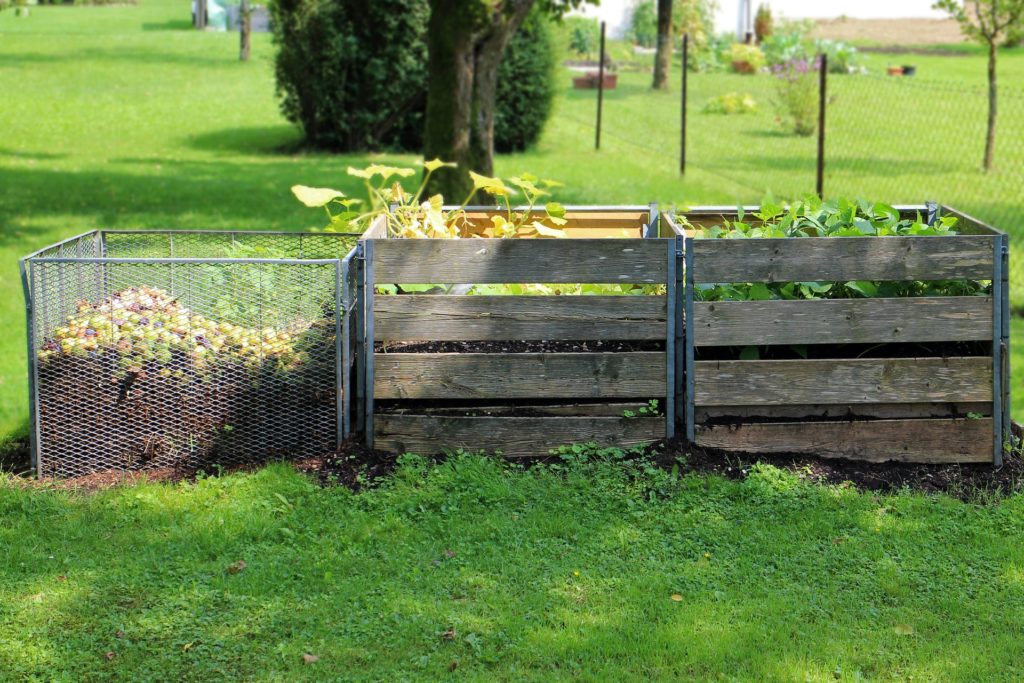
Finished compost is the single most universally beneficial amendment you can add to any soil type. In sandy soil it improves water retention. In clay soil it improves drainage and aeration. In depleted soil it reintroduces microbial diversity. A 2-to-3-inch layer of finished compost worked into the top 6 inches of a new bed, or applied as a top dressing on established beds, will do more for long-term soil health than almost any other single intervention.
Making your own compost from kitchen scraps, yard waste, and garden debris is ideal because it keeps nutrients cycling on-site and costs nothing beyond a small investment of time. A functional compost pile needs four things: carbon-rich browns (dried leaves, cardboard, straw), nitrogen-rich greens (kitchen scraps, fresh grass clippings, plant trimmings), moisture, and air. The ideal ratio is roughly 30 parts carbon to 1 part nitrogen by volume. Turn the pile every week or two to introduce oxygen and accelerate decomposition. Hot composting, where the pile reaches 130 to 160 degrees Fahrenheit, kills weed seeds and pathogens and produces finished compost in as little as 4 to 6 weeks.
Other Amendments Worth Knowing
Compost is the foundation, but other amendments address specific deficiencies that compost alone cannot fix quickly enough. Lime (agricultural limestone) raises pH in acidic soils and takes several months to fully alter soil chemistry, so fall application before a spring planting is most effective. Sulfur lowers pH in alkaline soils through a slower biological process and is best applied well in advance.
Biochar, produced by heating organic material in a low-oxygen environment, creates a porous carbon structure that persists in soil for hundreds of years. It does not directly supply nutrients but dramatically improves the soil’s ability to retain them. Charged biochar, which has been soaked in compost tea or liquid fertilizer before application, is especially effective. Worm castings (vermicompost) are an extremely concentrated source of plant-available nutrients and beneficial microbes. Even small amounts, 10 to 20% by volume in a transplant hole, can give seedlings a significant early boost.
Mulch: The Simplest Tool for Protecting Living Soil
Once you have built soil biology, protecting it is just as important as building it. Bare soil exposed to direct sunlight loses moisture rapidly, suffers from temperature extremes, and is vulnerable to compaction from rain impact. A 2-to-4-inch layer of organic mulch, whether wood chips, straw, shredded leaves, or grass clippings, moderates soil temperature, retains moisture, suppresses weeds, and breaks down over time to add organic matter. The soil beneath a deep mulch layer will be darker, cooler, and more biologically active than bare soil within a single growing season.
Wood chip mulch deserves a special mention. Fresh wood chips from a tree service, sometimes called ramial wood chips, are ideal. They are high in fungal food and, when used as a surface mulch rather than incorporated into soil, support the fungal-dominant biology that perennial plants and fruit trees prefer. Avoid using wood chips from diseased trees or those treated with herbicides.
Give Your Body the Same Care You Give Your Soil
Soil building involves a lot of physical work: hauling compost, shoveling amendments, turning piles, spreading mulch. After a long day of it, your back, shoulders, and hands deserve the same recovery-focused attention you give your garden beds. A professional massage is one of the most effective ways to relieve the deep muscle soreness and tension that comes with serious garden work.
A Long-Term Mindset for Lasting Results
Soil building is a multi-year project, not a single-season fix. The good news is that the returns compound. Each year of adding organic matter, minimizing disturbance, and feeding soil biology produces soil that is measurably more productive than the year before. Gardens that have been managed this way for five or more years often require very little supplemental fertilization because the nutrient cycling within the soil itself is so efficient. Using a garden planner is also a great way to build a long-term garden.
Start by testing your soil this season and addressing the most significant deficits first. Add compost as a non-negotiable annual practice regardless of what else you do. Mulch every bed you plant. Stop tilling unless you have a specific, temporary reason to do so. Watch how your plants respond, and let the results guide your next steps. The soil is already trying to be healthy. Your job is mostly to stop doing the things that prevent it and give it what it needs to take over.